Go to the top of the List
| Tadikkulama (Vannimava [Vavniyava]) HAEDIVAEVA Ancient Buddhist ruins, Listed in 1982 by Archaeo. Dep. Somasiri. Labeled #103 in Vanni Buddhist sites map | හැඩිවැව |
| Tandiyadi, Thaandiyadi (Madakalapuva [Batticaloa]) SUNITHTHAPURA | සුනිත්තපුර |
| Tadduvankoddai (Yapanaya[Jaffna]) DEDDUVAKOTTE Disc.- Deduvan means 'Dee+doova', or two islets, and kotte' implies a square or fort, 'Kotuva' The location justifies the name See Jaffna area Map | දෙදූව කෝ ට්ටෙ |
| Taiyiddi (Yapanaya[Jaffna]) JAAVEEDIYA Disc.- Suggets a location used by javanese people. Map | ජාවීදිය |
| Thachathopu, (Yapanaya[Jaffna]) Disc.- Suggets a location used by javanese people. Map | ජාවීදිය |
| Thalaiady (Yapanaya[Jaffna]) TALAVAADIYA Map | තලවාඩිය |
| Thallady (Mannarama) TALAVAADIYA Military and Tiger battle zone. see attack on church; Map | තලවාඩිය |
| Talaimannar (Mannarama [Mannar]) MANNARAMTHOTA, Thalemannarama Disc. 'Talai-m' means "front door' to mannar., cf., T.,talai-k-katai Hence mannaram-door → mannaramthota Also, Tala is related to Sthala, means ``place' or location Map showing Pasali,Talaimannar | මන්නාරන්තොට |
| Thalamkudamunmune (Madakalpuva [Batticaloa]) ThALGODAMUNNE The suicide bomber Manikkam Leel who is alleged to have attempted the life of Chandrika Bandaranaike in 1999 was a resident of this village. | තලගොඩමුන්න |
| Talavai (Madakalpuva[baticaloa]) TALAVA | තලාව |
| Talawilai, Talaivillu (Puttalama) TALAWILA, Talavila This is most well known as the sanctuary of St. Anne, and is on the coastal strip of the Kalpitiya Lagoon. See the write up on Kapitiya for maps and details. | තලවිල |
| Tampakamam(Yapanaya[jaffna]) TAMBAGAMA, Tambagomuva Hist.- Dutch VOC maps, Tambamme, Tambagamo. see Jaffna map1 | තම්ඹගම |
| Tampalakamam (Sirigonakanda [Trincomalee]) TAMANATOTA, TAMPALAGAMA, TAMBALAGAMUWA Meaning. In Tamil "kamam" has no immediate meaning, Hist. Emerson Tennent: Tambalagamuwa see P. Arunachalam, "Sketches of Ceylon Histor", reg. "Tamanatota" This was the port of the then province of "Tamankaduwa". | තමනාතොට, තම්ඹලගම |
| Tanmakkeni, Thanmakkeni (Giranikke, [kilinochchi]) TAMBAKANNIYA Regional map | තම්ඹ කන්නිය |
| Tandikkulam, Tantikkulam, Tanntikulam (Vannimava[Vavniya]) BULUVAEVA 'Bulu' is a large tree (Terminalia bellirica). The tamil form is 'Thaanri', and may have evolved into 'taandi'. | බුලුවැව |
| Tanduvan, Thanduvan (Mooladoova [Mullaitivu]) SANDUVAANA, HANDUVAANA This located on the Mooladoova (mullaitivu)-Siyambalaveava (Puliyankulam) road. The name is probably related to the worship of a deity representing the sun (Indra → Indu )or the moon (sandu), associated with a Mahayana representation of the Buddha. The Tamil name may have arisen directly from the same cult or that of a sun deity, where "dhatra" is one of the tuvatacatitar . Thus Taattuvan → tattuvan → Tanduvan. Or from the Sinhala, "Sanduvanya → Sanduvaana → Handuvan → Tanduvan". This is one of the villages in the Weli Oya development ares, which includes Kokilava (Kokkilai), Kalu-naedakaenna (Karunaddukeni), Kokkuthudaava (Kokkuthuduvai), Kumbal-amuna (Kumalamunai East and West), Gammalé (Chammalai), Uththiya-kanda (Othiyamalai), Handuvaana (Tanduvan), Thibbatuvala (Mulliyavalai East), Diyaunna (Thannirootu West), Kaanukaenna (Kannukeni) and Vaellampila (Alampil). See also Views of Tamil Academics in uthr report 5 issued 15-Sept. 1993, reg. Weli Oya area | හඳුවාන |
Tannimarippukulam, Tanimarippukulam, Thannimurippu (Mooladoova[Mullaitivu]) DIYAMALAN VAEVA, Kurundi Ancient Buddhist site, listed by Archaeo. Dep. (Somasiri, 1982). See also, R. L. Brohier. Disc.- In tamil, 'marippu' means death; and one meaning of 'Tani' is isolation, as in sinhala 'Thani'. Also,' Tanni-marippu' could mean water-dam, or death by water, as in the Sinhala name. The tank vas probably called 'Mahinda vaeva. According to E. Medhananda (2003), p 379, C. W Nicholas has reported that an inscription contains a reference to King Mihindu (9 CE) and refers to this tank. 'Janakapura' is a more recent colonization village near here. Labeled #82 in Vanni Buddhist sites map | දියමලන්වැව |
| Tantirimalai, Thanthirimale ( Anuradhapura ) RANSIRIMAALÉ Maradan Maduva, the present Vilpattu office area, is associated with Sāliya and Asokamāla, i.e., the time of Dutugamunu. 'Ransirimāle (tantirimalai) is also a part of the park since 1969, and is associated with the Saliya see write up under Thanthirimale | රන්සිරිමාලේ |
| Tanniyuttu, Thanniyuttu, Thanniyutzu, Thannirootu (Mooladoova[Mullaitivu]) DIYAUNNA This is located on the (mooladoova) Mullatuvu-(Siyambalavaeva) Puliyankulam road. Encarta Map map.pdf | දියඋන්න |
| Tanton Kovil (Madakalapuva[Batticaloa]) BUDU VIHARE Ancient Buddhist site, listed in Archaeo. Dept. 1982 Somasiri List Disc.- 'Kaamarka-tanton' is a name for the Buddha who has conquered 'Kama' or desire. See page 873 of the Madras Tamil Lexicon. Hence we believe that 'Tanton' is a shortened form for this, and this ancient Buddhist site got renamed as 'Tanton Kovil in post-Ruhunu-kindom times. | බුදුවිහාරෙ |
Tapassavalliya(Vannimava[Vavniya]) NOT a tamilized form Ancient Buddhist ruins. Labeled #78 in Vanni Buddhist sites map | තපස්සවල්ලිය |
| Tanakkilippu. Thanakkilippu(Yapanaya [Jaffna]) RANAKELIYA Disc.- Possibly an arena for war games. | රනකෙලිය |
| Tankkarukuruchchi Thankkarukuruchchi(Yapanaya[Jaffna]) DUNUKAARAKULISSA Disc. This is a 'garrison of Archers (bow-and-arrow shooters)' This place name, and Batakotte (Vaddukkoddai) testify to the fact that the north has been an ancient battle ground between the south Indians and the rulers of the Island. The word `Kuli' was used in old sinhala for hamlet or village. c.f., Sigiri Griffit: 288 (9th century) – "I am Gunakara (of) Ambagam-kuli (in the) Northern Province | දුනුකාර කුලිස්ස |
| Tambaddy, Thambaddy (Yapanaya [Jaffna]) GAMBAEDDA | ගම්බැද්ද |
| Tambiluvil, Thambiluvil (Ampare) THAMBILIVILA This is in N-akkaraipattu, bounded in the east by the sea, and by the river/vila in the west. It is about 40km north of Arunagama (arugam) bay. The color of the water may have given rise to the place name. The population is mainly christian Tamil and linked with Sirikovila (Tirukkovil). See sectarian politics, LTTE, Karuna etc. In Tamil "vil" means "Bow" and has no immediate meaning, | තැඹිලිවිල |
| Tandikulam, Thandikulam (Vavnimava [Vavniya]) DANDAWEWA Near Vannimava. There are Buddhist artifacts, ruins of a temple, stone pillars, moonstones, important stone inscriptions etc, all in private land, with no archaeological attention what so ever. See Labels 100-116 in Vanni Buddhist sites map. | දන්ඩ වැව |
| Tannamunai, Thannamunai (Madakalapuwa [Batticaloa]) DANAMUNA | දනමුන |
| Tanankillapu, Thanankilappu (Jaapanaya [Jaffna]) THANA-KALAPUVA RANAKELIPUVA In Tamil "Killapu" means "raisin, speech, a restaurant, etc", a hence a meaning appropriate for a place name does not exist. It is likely that this place name is derived from a Sinhala place name. The name "Ranakelipuva" suggests a possibly an arena for war games. The name "Thana-kalapuva" implies a shallow-basin of water full of weeds. . This was an important battle region against the LTTE in operating Rivikirana, and Kinihira in the mid 1990s. Hence a high security zone had been centered around this area. | රනකෙලිය තණ කලපුව |
| Tantitrimale, Tantirimalai, Thanthirimale (Anuradhapura) RANSIRIMAALE Hist. Recumbent Buddha of the Pollonnaruwa Period; similar to the Galvihara Buddha; 36 feet long; Arch. Survey of Cey. 1907 p34 Legend A neckless with beads formed like the "Ransiriya" butterfly was gifted to Asokamaala, and a Temple was built here. Ransirimaale -> Thanthirimale. Legend Ransirimaale vihara projects Pictures and article | රන්සිරිමාලේ |
| Tattantotam, Thattantotam, Thattanthotam (Yapanaya[Jaffna]) Thakkanathota, NAVANDANTHOTA Disc.- 'Navadan' is a caste-designation for smiths. Tattaan can mean the same caste group, see Madras tamil Lexicon p1718. "thakkana", "Thakshana", and "Technique", or technology are from the same Sanskrit-Pali source. See Map near Jaffna | නවන් දන්තොට තක්කනතොට |
| Thavarakulam [Madakalapuwa [batticaloa]) THAVARAVEVA Near Vahaneriya (Vakaneri) Hist. Ancient site, Early Anuradhapura period Old ruins, stone pillars etc. Not excavated Archaeo. Dept. file EC/B/E/27 folio 179-180. | තාරවැව |
| Tarapuram, Tharapuram (Mannarama [Mannar]) THRAPURA Located near 'Thaleimannar'. Hist. 'In Mahayana buddhism, Thara or `Tara' is the consort of the Bodhisattva 'Avalokitheshwara'. Mahayana buddhism co-existed and also sometimes contested Theravada buddhism. The place name 'Tharapura' exists in Tamil Nadu as well, where Buddhism flourished during the hey day of Anuradhapura, and into the medieval period. Today Tharapura is mainly a Muslim village. War: Two men from Tharapuram were implicated in Burma LTTE-arms Smugl., 2004 Allegations of human rights violations etc., Army/Navy LTTE clashes etc. Implications of the Sethsamudura Project | තාරපුර |
| Tavady, Tavadi, Thavady (Yapanaya [Jaffna]) THAMBADIYA, JAAVAADIYA Jaa-vaadiya is a region used by the Javanese inhabitants in medieval times. 'Thambadiya' refers to the 'amber-coloured (thamba)' water('diya') in the 'Thanmbady region. Devotee hung on hooks on Thambadiya-Sudukanda road, goint to Sudumalai Amman temple | තම්ඹදිය ජාවාඩිය |
| Tavasikulam, Thavasikulam, Javasikulam (Vannimava [Vavnia]) JAAVAESIVAEVA, JaVAESIVAEVA This is located close to Vavniya town. The name suggests a habitation of Javanese (c.f., Java patuna → Japanaya). | ජවැසි වැව |
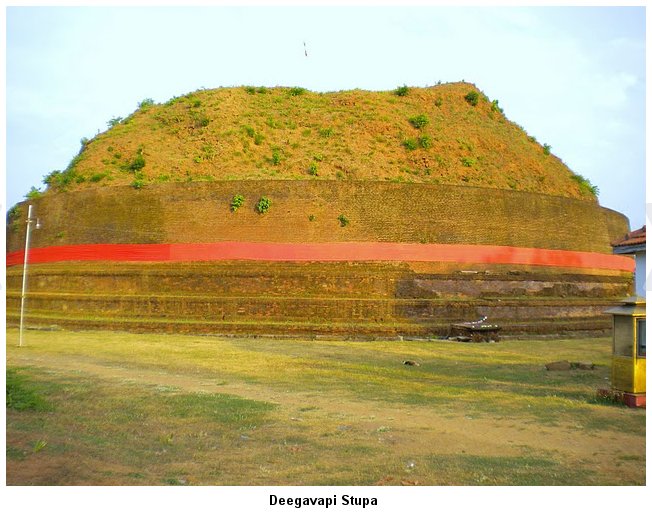
| Teekavapi, Theekavapi, Dighavapi, Digavapai (Ampare) DIGHAVAPI,DHIGAVAPI DEEGAVAAPI, ⚓Digavapi See the entries under Ampara, Irukkamam., and Buddhankalai, Putthankallai This is the name of a pre-CE Daagaeba (Cetiya or Stupa), a very ancient irrigation Tank (vapi) and a modern administrative district in Sri Lanka. See Digavapi cetiya, photo Prof. Siromi Samarasinghe, 2011 In a a pious legend connected with the Digavapi cetiya (Dhajagga Paritta), it is said (in the Saararthapakaasani) that once a samanera (a novice monk), helping to plaster the Dighavapi cetiya, fell from the top. His colleagues shouted to him to recall the Dhajagga Pirita. He did so, and was miraculously saved! The village of Mahamuni, residence of Sumana, wife of Lakuntaka Atimbara, was in Digavapi (Dhammapadatthakatha, Vol. iv. 50). According to the account given in 'Manorathapurani', Digavapi was nine leagues from Tissamaharama. The Mahavamsa (Mhv), which contains a mixture of fact and ancient traditions, states that the Buddha himself visited the town, an area of the naga tribe, and on the spot where he sat in meditation a cetiya was later erected (Mhv.i.78; Dpv.ii.60; SamanthaPasaadika. i.89). It seems to have been the regional center (Mandala) for the country (Digaamadulla?) lying between the Pihiti-rata and the province of Rohana. Thus Dutugamunu's brother, Tissa, governed it by the order of his father. Later, on the death of his father, he retired to Dhigavapi with his mother and the elephant Kandula (Mhv.xxiv.2, 14f, 48). When he made peace with his brother, he was again sent there to look after the district. After the re-conquest of the Pihiti rata, Tissa was again in charge of Digavapi, for we find him being sent for from there at the time of Dutugamunu's death (Mhv.xxxii.2). Tissa (later renamed Saddhatissa) founded the Digavapi-vihara, in connection with which he built a cetiya, to which he made valuable offerings (Mhv.xxxiii.9, 14). We hear of Digavapi in connection with the campaigns of Parakkamabahu I. (Chv.lxxiv.89; 98, 110, 180; lxxv.1, 10). (Chv.xcvi.25, 28; for its identification see Chv.Trs.ii.30, n.1). Later Rajasinha-II gave the district round Digavapi to the settlers who came from Holland The Muslims of Madakalapuva are descendents of Moor refugees settled there by King Senerath 1n 1626, when they were expelled by the Portuguese from the south-west maritimes (see de Queroz, vol. 2 , p 745) Today, the Dighavapi area has become a region of Muslim influence. Today this is a threatened site, encroached by many settlers who do not know/respect its historical significance. Its great tourist potential is ignored. See the entry under Putthankalai. i.e., Buddhangala, which is an interesting site which is close by. The department has located 35 archaeological sites in Dighavapi itself. The archaeological area is at least 42 square kilometres in extent. Yet the area declared under the Archaeological department is only 400 yards in radius of each site leaving the other areas unprotected, under the Antiquities Ordinance No. 9 of 1940. Digavapi was declared a sacred area on 20-feb-2008 and the documents awarding the status were handed over to Ven. Nannapurawa Buddharakkhitha. There are several ancient inscriptions in the area. In 1986 a gold leaf inscription 14 cms by 1.5 cms had been unearthed. The inscription had been deposited inside a reliquary made of thick gold sheets. The text of the inscription was as follows: "Hail. The stupa (reliquary) of King Mahitisa (Kannittha Tissa) son of King Naka". King Kannittha Tissa reigned from 164- 192 CE. This also shows the links to the Naga people [the early inhabitants of Naagadeepa (modern Jaffna) and Mayarata (Kaelaniya region)], and their God Natha, who was later admitted to Buddhism as a Bodhisatva. News Item 2008 | දීගවාපි දීඝවාපි |
| Tenmaradchi, Thenmaradchi (Yapanaya [Jaffna]) HENAMURACHCHIYA See previous discussions of 'Murachchiya' (watch post), and Hena (slash-and-burn cultivation) | හේන මුරච්චිය |
| Taddukulampattu, ThaddukulamPattu(Gonakanna[Trincomalee]) DEDOOVAKORALEPATTUVA This where the Siriyaya(Tiriyai) Vatadage, Buddhist ruins, is found See entry under Tiriyai | දෙදූව කෝරල පත්තුව |
| Tandiyadi, Thaandiyadi, Thandiyadi (madakalapuva [Batticaloa]) SUNITHTHAPURA This was an LTTE camp fallen to the SL-army during the ebb and flow of the civil war. | සුනිත්තපුර |
| Tamilakulam, Thamilakulam (Mannarama [Mannar]) DAMILAVAEVA The existence of such names indicates that while the surrounding area was inhabited by other communities, probably sinhala speakers, there were pockets or locations which were predominantly Tamil speaking. | දම්ලවැව |
| Tatcinamuratamadu, Thaththinamarathamadu, Thachchanamaradamadu, (Vannimava [Vavniya]) DAKUNUMURAMADUVA, Dakunu-murathaen-maduva தட்சிணாமூர்த்தி is a common Tamil proper name, referring to a saiva acetic. It is also used among Jains for a name derived from an Upanishad. However, here தட்சிணா refers to the southerly direction, consistent with the Sinhala place name. | දකුණුමුරමඩුව |
| Terumurikandy, Therumurikandy, Terumurikandi, Therumurukandi (Giranikke [Killinochchi]) TELAMURAKANDA This is located south of Ranamaduva )Iraanamadu) and north of Kokavila, on the A9 route. 'Tela', related to 'cheri' in Sanskrit here means a street or inhabited region. It could also mean ""what is within the view". 'Murikandy' is a tamilization of Murakanda', or watch hill. This location is likely to have been an ancient military watch post. See also the place name "Murikandy". (Note also that "Thela" is the sinhala name of the milky Mangrove (Excoecaria agallocha) with a poisonous latex which can cause blindness). Telamurakanda LTTE trenches 2008 : Fallingrain Map | තෙලමුරකන්ද |
| Timilativu, Thimilathivu, Thimilathiu (Madaklapuwa [Batticaloa]) Kevuldoova 'Kevula' in sinhalese refers to a fisherman as a 'sinful person'. In Tamil 'Thimil' could refer to a fisher caste using fishing boats. Today this is an island used by the SL air force. | කෙවුල් දූව |
| Tettakkuli (Mannarama[Mannar]) KAETAKULIYA, GAETAKULIYA In tamil, 'Theatta' refers to the tree Strychnos potatorum, known in Sinhala as 'Inginiya (gaha)', as in 'Inginiyagala'. The word `Kuli' was used in old sinhala for hamlet or village. 288 (9th century) – "I am Gunakara (of) Ambgam-kuli (in the) Northern Province But we do not regard this to be the source of the place names. Map | කැ ටකුලිය |
| Tettavadimarutankulam(Mannarama[Mannar]) KAETA-MATDI-KUMBURE-VAEVA Map | කැටමැටි කුඹුරෙවැව |
| Tellippallai, Thellipalai ,Telipola, Thelippali (Yapanaya [Jaffna]) THELIPOLA, TELIPOLA, Theripala Ancient Buddhist ruins. Mentioned in the Nampotha. "Buddhavalavva" is in Telipola. The "Andakaara Chetiya" and the "Aaloka Chetiya" of ancient Pali texts dealing with the Buddha's legendary visit "may be" here. The word 'Teli','Thel' are not found in the old Tamil dictionaries. It may have been 'Theri-pala', a place associated with Buddhist nuns. Change from Theri→ Theli in Tamil usage is quite natural. Jaffna home of S. J. V. Chelvanayagam. Base hospital. The state of the Telipalai railway station in 2009, vandalized by the LTTE, seen at the end of the war, 2009 | තෙලිපොල, තේරිපොල තේරිපල |
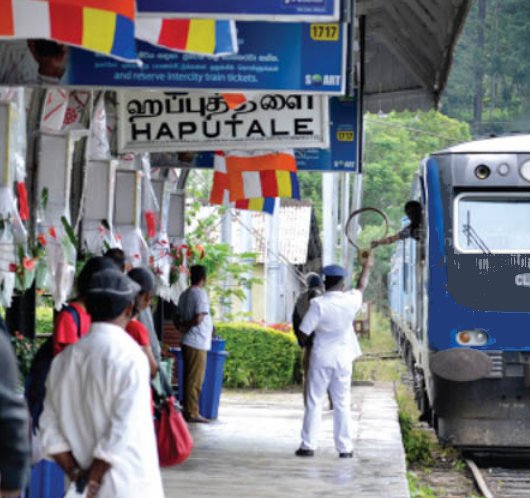
| Thangamalei (Haputale District]) Sangamale Disc. "Thanga-malei" is sometimes interpreted to mean "golden mountain". It is a bird sanctuary and has been a national park since 1938; it is near Hauptale and Idalgashinna, and has an old Buddhist vihara in ruins.It offers incredible vistas of the lower plains. Haputale, a railway stn. close to sangamale | සංගමලේ |
| Thenmaradchi (Yapanaya [Jaffna]) HENAMURACHCHIYA Disc. Heana or Chena is a primitive cultivation 'Murachchiya' is a place where a watch is kept A frequent flash point | හේන මුරච්චිය |
| Thennamaravady (Mooladoova[Mullaitivu]) HENMURAVAADIYA Thennan, thenna-maram etc in T., may mean sweet-coconut toddy, husk etc. | හේනමුරවාඩිය |
| Theravikulam (Mooladoova [Mulaithivu]) SOROVVAEVA There may have been a sluice connecting to the causeway here. The word "theravi" may be an adaptation to Tamil from "sorov", or we may note that in Kannada (and Telkigu), teravu and terapa may mean "opening", or gateway. This is located on the Puranthaenna (Paranthan)-Althkulissa (Puthukudiruppu) road which ends in Mooladoova (Mulaithivu) | සොරොව්වැව |
| Thettativu,Tettativu (Madakalapuwa [Batticaloa]) GAETTADOOVA, KAETADOOVA, INGINIDOOVA In tamil, 'theatta' refers to the tree Strychnos potatorium, known in Sinhala as 'Inginiya (gaha)', as in 'Inginiyagala. Map Botany | කැ ටදූව, ඉංගිනිදූව |
| Thikkodai (Madakalapuwa [Batticaloa]) HIKGODA Army camp. | හික්ගොඩ |
| Thimilatheevu, Thimilathiv (Madakalapuva [Batticaloa]) DAMILADOOVA The existence of such names indicates that while the surrounding area was inhabited by other communities, probably sinhala speakers, there were pockets or locations which were predominantly Tamil speaking. | දම්ලදූව |
| Thiraykkeani, Tiraaikeni, Thiraikeni திராய்க்கேணி (Ampara ) HIRIKAENNA 'Kaenna" is from the sinhala word "Kaeneema" which means excavate or dig. The Tamil word "Keani" may be related to the archaeic "Kenthudal", i.e., excavate. "Hirikaenna" signifies an "auspicious/occult digging or excavation". An alternative, but less likely toponymic possibility is to note (MTL p) that the Tamil, திரா ய், Thiraay, is probably connected with (L), Mollugo Spergula or Glinus oppositifolius . This is a prostrate herb which contains triterpenoid saponins. There are at least 30 species of this, "theera palaa", තීරපලා, in the Island. See also the discussion under PAS-IRI_GODAELLA. The names "theerapalaa", and "Thiray" may have originated from the Sanskrt. "Dheera" Also, in Tamil "tirāy → Keerai", கீரை is a generic word for herbs. Botany | හිරිකැන්න |
| Thiraymadu (Madakalapuva [Batticaloa]) HIRIMADUVA "Hirimaduva", or "blessed/occult structure", is a type of rustic construction for devotional purposes, esp. in forest areas, consecrated to jungle deities. The place name could occur from such a practice, and such names are common. See also the discussion of the Tamil "Thiraay" under "Thiraykkeani" Map | හිරිමඩුව |
| Thirikunamalei (Sirigonakanda [Trincomalee]) SIRIGONAKANDA, GOKANNA Hist. Gokanna, Eng. Trincomali, Trinconalee Gokarna in ancient texts, Sri Gokanna vihara Meaning: Siri→Thiri; Gona ↔ Kona, kanda → Malei. According to legend, the hill appeared like a stag ('Gona' in S.) from the sea. This lead to the name 'Gonakanda → Gokanna', and the Sri-Gonakanda vihara gave the name 'Srigonakanda→Thirikunamalei'. Many European names, Trinkimalay(Baldaeus), Tirnquelemale, Trincommali etc. Read the history of the temple as seen by some Buddhist writers. The "Koneswaram" name should not be confused with temples in India, with similar names and referred to in Hymns by, e.g., Thiru-gnana-sampanthar. Gokanna was used as a harbour by Parakramabahu I; Mahavamsa records that Panduwasdeva landed at Trino. mouth of the 'mahakandara' river. Historic 'Koneshwaram temple . Robert Knox surrendered to a Disawa of the King of Kandy, at Moodutara (Muttur), near Trinco. Robert Knox in his Historical Relation of Ceylon (1681) says: The King had the benefit of the trade of two Ports, Cotiar (Trinco harbour) and Portolone (Puttalam), into each of which used to come yearly some twenty to thirty sail of small vessels which brought in considerable customs income." Trincomalee was a flourishing trade centre, as indicated by gold Roman coins (second century CE) found from the area. Ninety seven silver coins with the royal seal were found from Bakmeemade in Kattakulam Pattu and 30 silver coins found from Dambagaha Ulpotha in Hurulupalatha. Demog.1981 census: 86,743 Tamils; 86,346 Sinhala; 74,403 Moors Terrorism Pulip Padai- precursor to Tigers- launched here on 12 August 1961, in front of Kooneswaram See Pulip Padai Kulakkottan padai was an organization that came about in ~2000 under the aegies of the LTTE. See Map along east coast | ගෝකන්න සිරිගෝනකන්ද |
Thiriyayi, Tiriyai, Tiriyaya; திரியாய்(Sirigonakanda [Trincomalee]) SIRIYAYA, THIRIYAYA Ancient names used in Pali-prakrit: Grikanttha, Girihadu, Tittuppana Hist. 'Girikanda Siva' was the name of an uncle of Pandukabhaya. Mentioned in the Mahavamsa, Visuddi magga etc. The two merchants Thapassu and Balluka, who brought the "Kesha dhathu" (hair relic) of the Buddha are credited with initiating the earliest shrine here ~ 2 century BCE or before. The "Vatadage Temple" ("temple with the round pavillion"), is one of the oldest dagobas in the world, with a 2nd cent. BCE stone inscription. As the Theravada-Mahavihara influence declined, Titiyaya seemed to have been an important Mahayana center. An 8th Century CE sanskrit inscription was found here, with a a famous 8th cent. image of goddess Thara. This image from Thiriyaya, was gifted to the British Museum by Governor Brownrigg, and testifies to the status of Mahayana Buddhism during that period, since Thara is the consort of the Bodhisattva 'Avalokiteshvara'. The vatadage may have housed a statue of Avalokithesvara-natha. Iamges See Buddha in the crown: Avalokitesvara in the Buddhist Tradition of Sri lanka, by John Clifford Hold, Oxford U press (New York) (1991) See also entries under 'Tharapuram', Kandasamymalei, Kurukkalmadam, Nallur. Read about Thapassu and Balluka, Girihaduseya Denis Fernando has claimed that the port "near Tiriyaya Kuchchaveli, presently known as Palavaki, is Jambukola, to which the sacred Bodhi tree was brought in the 3rd century B.C. from the port Tamalitti on the Ganges delta. See the write up under Dambakola Labeled #133, 134 in Vanni Buddhist sites map Site 133 is the Siriyaya 'forest' area Site 134 is where the Buddha image was found. | සිරියාය, තිරියාය |
| Thiruketheeswaram, Thiruketheeshvaram, Tiruketheeswaram (temple) (Mannarama [Mannar]) SRIKETH-EESWARAMA temple Ancient Buddhist site, listed by Archaeo. Dep. Somasiri, 1982 A stone pillar inscription in Sinhala by King Sena III (9 CE) Old Hindu temple was destroyed by Portuguese in 1589 New Temple built in 1976 Pre-10th century Buddhist ruins Thiruketheeswaram train station, rehabilitated in 2014 after its destruction by the LTTE during the Eelam wars. | සිරි කේතීස්වරම සිරි කෙත්ඉසුරම (කෝවිල) |
| Thirumangalai(SriGonakanda[Trincomalee]) SIRIMANGALAMA Located in the Seruvila AGA division | සිරිමන්ගලම |
| Thirunelveli, Thirunelvely, Tirunelvely (Yapanaya [Jaffna]) HIRI-NELA-VELLA Meaning: Tamil name, echos 'Thirunelveli' in Tamil Nadu. The Sanskrit word nlvaara and a corresponding Elu form nelavaara refer to 'wild rice'. Thus Hirinela is probabaly a wild variety of rice. In Tamil, the word 'nel' is commonly used for 'paddy' (bot. Oryza sativa), and the sinhala word 've~lla' (වේල්ල)is a bund. Thirunelvely is locaated near the Jaffna University area. | හිරි නෙල වැල්ල |
| Thirupalugamam (Madakalapuwa [Batticaloa]) SIRIPALUGAMA, hiripalugama Kiripalu, hiripalu etc are names ascribed to 'palu tree' Mimusops indica variants which may have a lighter shaded leaf etc. | හිරිපලුගම |
| Thiruviyar, Thuruaiaru (Giranikkae[Killinochhi]) GURUVANOYA Near Ranamaduva (Iranamadu) Thamilselvan, (the LTTE spokesman) was supposed to have been bombed here, 2007. secret meeting | ගුරුවන්ඔය |
| Thondaimanaru,Thondamanaru (Yapanaya [Jaffna]) THONDAMANOYA Presumably refers to the Chola Minister Karunagaran Thondaman, sent to procure salt for the Chola Kingdom. There is a 16th century Muruagn Kovil here, in Selasanithi.The worship at Selvasannithi is unique The temple priests perform pujas without chanting mantrams. Festival cart at the Murugan Temple. In addition, in the same area there is the "ashram" of Swami Gurubala, born Peter Schoenfeldt, built around 1945. In April, 1971, Thangathurai, known as mama (uncle) and some 15 others were making explosives at the Thondamanaru high school when a bomb went off, seriously injuring Chinna Sothi of TLO (Tamil Liberation Organization). The mangroves here support freshwater and saltwater crocodiles. See Santhiyapillai and Wijayamohan, Sunday Times, 1st Feb. 2004, p8. | තොන්ඩමන් ඔය |
Thonikal, Tonikal,Tonigala(Vannimava[Vavniya]) THONIGALA, ORUGALA Ancient Buddhist site The rock cliff has the shape of a canoe (Oruva), and gives the name "Orugala". Tamil for 'Oruva" is 'Toni'. A stupa on top of the rock, and an adjoining have been plundered and destroyed. Two important 4th century stone inscriptions. The Brahmi inscriptions have given rise to the name 'Nagaragama'. They also throw light on ancient banking practices etc. More details may be found in Lakshman Perera, The institutions of Ancient Ceylon from Inscriptions (Vol I 2001,Vol II 2003 and 2005) Labeled #95 in Vanni Buddhist sites map | තෝනිගල, ඔරුගල |
| Thoppigala, Toppikal (Madakalapuva[Batticaloa]) See entry under Kudumpimalai | තොප්පිගල |
| Thorattapputti (Japanaya [Jaffna]) Doratumukka This is a very small island in the mouth of the lagoon, and next to the Punnalai (Punnaga) causeway leading to Karaitivu (Karadiva). The word 'doratu' indicates 'entrance to the lagoon. | දොරටුමුක්ක |
| Thumpalai (Madakalpuva [Batticaloa]) DUMPALAAVA, DOMPAALAVA, Thimbiriya The name may be related to 'Thimbiri'(Embryopteris glutinifera) Or it could also be related to a species of wild tobacco, a type of 'milk weed' (solanum mauritianum) with yellow berries, common here. There is also a Dumpalaagolla (Thumpalan-cholai) nearby. | තුම්පලාව, තිඹිරිය |
| Thunday, Thoondai (Mooladoova [Mullaitivu]) THUNDUVA, තුන්දුව This means a "thuduva" or a piece of land projecting into the sea. It could also mean "thun doova", or a formation as in a triplet of islands. There is a "thunduva" near Bentota, in the Southern province. | තුන්දුව |
| Thumpalancholai, Thumpalagncholai, Tumpalanchcholai (Madakalpuva [Batticaloa]) THUMPALAAGOLLA, Thimbirigolla See write up under "Thumpalai". | තුම්පලාගොල්ල තිඹිරිගොල්ල |
| Thunukkai, Tunukkai (Mooladoova [Mullaitivu]) DUNUKAVA, DUNUKEYYAWA Hist.- Ancient Buddhist site. The Tunukkai inscription in Sinhala by Kasyapa (10th CE), and by Dappula IV, are significant. See also Vavnikulam War. Alleged location of LTTE jails see report, April 2006 Named Dunukava in Vanni Buddhist sites map | දුනුකාව |
| Thuraineelavanai, Thurai Neelaavanai (Madakalapuwa [Batticaloa]) NEELAVAN-THOTA, SIRINEELAVANAYA This is in the GS area of Kalupanchithuda (Kaluvaagnchikkudi) and the name may be related to the existence of a ferry (thota) here. Another possibility is that the Tamilized name is "Thiri- Neelaavanai", and relates to the use of this site for religious observances. The name "neelavanaya" arises from the blusih aparence of the landscape ("vanaya") as reflected in the lagoon. | නීලවන්තොට සිරිනීලවනය |
| Thuvarimottai, Tuvarimoddei (Mooladoova [Mullaitivu]) THÕRAMOTTE, THÕRAMADÉ The 'o' sound in Thõra is long. The word madé, is sinhala for 'muddy'. 'Thora' here is wild pea (Vajanus cajan). 'Motté' ← Moddé ← Madé signifies a muddy, swampy place. Note that 'ma'→'mo' as in 'Bisava'→'Bisova', 'Maharu→Moharu'. See Gunasekera Comprehensive grammar of the sinhala language. The sinhala word 'mada' probably arose from 'Manda', skrt. for 'scum'. The latin word for 'marsh' is 'madeo'. The greek word 'mydos' means 'damp'. However 'mud', usually claimed to be linked to old german, may also have come from the latin 'madeo' (marsh) which may itself be connected with the Skrt. Manda → mire', as in 'quagmire', used even today in english and french (tourbiÚre). The tamil word for such a place would be 'acumpu', 'ayam', 'cakati', 'sheru', etc. | තොරමොටේ |
| Tillaiyadi (Puttalama) THELLIYADDA "Thela" is the sinhala name of the milky Mangrove (Excoecaria agallocha) with a poisonous latex which can cause blindness. Also, "Liyadda" is a sinhala word for a grove of vegetation. Thus THELLIYADDA has a clear toponymic meaning. This is located near the Kalpitiya Lagoon | ෙතලලිවදද් |
| Tiriyayi, Thiriyai, Tiriyay; திரியாய்(Sirigonakanda [Trincomalee]) SIRIYAYA, THIRIYAYA See under Thiriyai | සිරියාය, තිරියාය |
| Tiruketheeswaram, Tirukkethishvaram, Thiruketheeswaram, Tiruketheeswaram (temple) (Mannarama [Mannar]) SRIKETH-EESWARAMA temple Ancient Buddhist site, listed by Archaeo. Dep. Somasiri, 1982 A stone pillar inscription in Sinhala by King Sena III (9 CE) Old Hindu temple was destroyed by Portuguese in 1589 New Temple built in 1976 Pre-10th century Buddhist ruins Thiruketheeswaram trains station, rehabilitated in 2014 after detruction by the LTTE | සිරි කේතීස්වරම සිරි කෙත්ඉසුර (කෝවිල) |
| Tirukovil(Amapre) SIRIKOVILA This location is mentioned in de Queyroz(p. 65) for its temple used by Vedda, Hindu and Buddhist people. The Hindu kovil is referred to as "tricoli" by de Queyroz probably because it had three Gopurams. There was an old Skanda (Murugan) temple associated with the Buddhist-temple complex which was destroyed by the Portuguese General Jeronimo de Azevedo who killed the Buddhist "ganinanses' of the temple. It is also marked in the Dutch map from 1695Beeldbank National Archives, the Netherlands. At that time this was a sinhala settlement. The Buddhism practiced by the people included, as is the case today, significant Hindu elements. The Greek conqueror Alexander (or Iskander in Persion and Skanda in Sanskrit) has a strong presence here, closely linked to myths about Ravana. The place-name "Kandanpanan thuari' ((Kantapanan Turai) has been mis-interpreted as the port (thurai) or shore-landing of Skanda's weapon - alledgedly Skanda's arrow. (e.g., see Selvarajan Rasiah). However, the name "the port of Skanda's arrow" does not make much sense, and there is no legend about such an arrow locally or in other folk lore. In any case the word `panan' cannot be interpreted as `arrow' in old Tamil 9as may be checked from the Madras tamil lexicon or the Cologne old-Tamil dictionary). Noting that the `p' and `v' sounds easily interchane in place-names, the name is more likely to have arisen from from the "Kanda-vanan thara", where`vana' is old as well as modern sinhala for `forest'. Thus "Kanda-vanan thara" refers to the sea-portal to Skanda's forest. While the apotheosis of Alexander to the divine Skanda probably dates to pre-christian times, the Hindu/Pandyan kovil is believed to be from the 13th century. Hindu, Buddhist and Veddha people patronized the temple in the 19-20th century, when this was a stopping point for thePaadayaathra pilgrims going to Katharagama. The prefix "tri" in the Portuguese and Dutch renderings is probably not from "thun (three)", but from the Tamil "thiru" or the Sinhalese "Sri" or "siri" or the equivalent. Eelam Wars: Piyaratne Ranaweera of Galmunna (Kalmunai) police who escaped witnessed LTTE renegation of Balasingham's promise to President Premadasa The massacres of some 600 police were supposed to have been carried out around Sirikovila (Thirkkovil). See Globe and Mail, Toronto June15, 1990 Map along east coast | සිරිකෝවිල, කන්දපැන්නතොට |
| Tirumangalai, Thirumanagalai, Tirumangalavai (Sri Gonakanna[Trinkomalee]) SUNETHRA VAEVA Ancient Buddhist site, listed by Archaeo. Dept., Somasiri, 1982 Ruins scattered over ~5 acre region. Ancient brickwork, stone work etc. Stone water receptacles, stone doors, etc. Currently a Saiva temple is being erected on this site. See also p. 300 of E. Medhananda (2003) | සුනේ ත්රා වැව |
| Tissamalei (Yapanaya[Jaffna]) TISSAMALUVA Disc. This is village which was part of the ancient complex of 'aaramagam' or temple villages, like Mallagama, Buthpura, Hunugama, Gothamaluwatte etc. | තිසාමලුව |
| Tolpuram(Yapanaya[Jaffna]) Thalapura see Jaffna map1 | තාලපුර |
| Toppur (Sirigonakanda [Trincomalee]) THUPAPURA, STUPAPURA GDA Perera's article | තූපපුර |
| Tunnalai, Thunnalai (Yapanaya[Jaffna]) THUNNALA There is a Tunnalai North and Tunnali South. One of the earliest recorded caste clashes in independent SL took place here. See Caste clashes map | තුන්නල |
Go to the top of the List





No comments:
Post a Comment